


Hunger remains one of the greatest global challenges, particularly in developing regions where food production is threatened by climate change, pests, and infertile soils.
As the global population rises and arable land decreases, innovative solutions are urgently required.
One such solution is the adoption of Genetically Modified Organisms (GMOs) in agriculture. GMOs have the potential to increase food production, improve crop resilience, and enhance nutritional value, making them a promising tool in addressing Africa’s hunger crisis and strengthening long-term food security.
As of 2025, the world population stands at around 8.1 billion.
Growth has slowed in developed countries, where couples often prioritize careers, education, and lifestyle, leading to delayed or fewer childbirths. In contrast, Africa continues to experience high fertility rates, with many countries averaging 4–6 children per woman.
According to the United Nations Population Division (UNPD), Africa is projected to contribute the largest share of global population growth by 2050.
Several cultural, social, and economic factors fuel Africa’s high birth rates.
Poverty, child marriages, and limited access to family planning services extend reproductive years for many women.
In rural communities, children are often viewed as sources of labor and support for families dependent on agriculture.
Religious practices, such as those of the Johanne Marange apostolic sect in Zimbabwe, further normalize early marriages, with girls sometimes married off as young as ten years old.
Such dynamics amplify Africa’s population growth and, in turn, intensify food insecurity.
The consequences are severe. More people mean more mouths to feed, yet agricultural production often fails to keep pace.
Overpopulation strains farmland, leading to soil degradation, lower yields, and widespread hunger.
Countries such as Nigeria, one of Africa’s most populous nations, face persistent food shortages.
The 2023 Global Hunger Index reported that Somalia had a score of 44.1, signaling an extremely alarming situation where nearly half the population relies on food aid.
African governments and regional bodies have launched initiatives to address hunger and overpopulation.
The African Union (AU) has partnered with the Global Alliance Against Hunger and Poverty, aligning with Agenda 2063 and the Comprehensive Africa Agriculture Development Programme (CAADP).
In 2022, the AU declared the Year of Nutrition to combat malnutrition. Individual countries, such as Malawi with its Keeping Girls in School Program, are tackling child marriage and promoting education as a pathway to reduced fertility rates.
Despite these efforts, budget cuts in agriculture across many countries have undermined progress.
For sustainable solutions, Africa must go beyond short-term relief and embrace innovative technologies.
GMOs in agriculture offer such potential. By using biotechnology methods like Clustered Regularly Interspaced Short Palindromic Repeats (CRISPR), scientists can create crops that yield more, resist pests and drought, and provide enhanced nutrition.
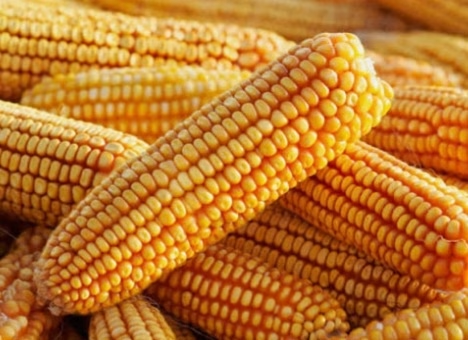
Genetically engineered crops such as Bt maize and Bt cotton naturally repel insects, reducing reliance on pesticides and minimizing crop losses.
GMOs also enable farmers to grow more food on limited land, which is vital in densely populated regions. In drought-prone areas, GMO varieties can survive harsh conditions, ensuring harvests even during prolonged dry spells.
The nutritional benefits of GMOs are equally important. Golden rice, engineered to produce beta-carotene (a source of vitamin A), addresses vitamin A deficiency, which can lead to blindness and weakened immunity in children.
Similarly, biofortified cassava enriched with iron, protein, and vitamin A targets malnutrition in African communities reliant on cassava as a staple.
Beyond crops, transgenic goats have been developed to produce milk with higher nutrient content, improving access to essential micronutrients.
Despite their promise, GMOs remain controversial. Critics fear allergic reactions, especially when genes from allergenic foods are introduced.
Concerns about antibiotic resistance also persist, as some GMOs use antibiotic-resistant markers during development. Moreover, skeptics argue that long-term health effects remain uncertain.
Environmentalists worry about biodiversity loss and potential dependency on multinational seed companies.
While many of these concerns lack conclusive scientific evidence, they highlight the need for strict regulation, transparent research, and public education to build trust.