



In my previous reports, I discussed how the high Total Cost of Ownership (TCO) of used machinery is largely driven by obsolete control systems. Last week, I explained that these systems are like a “dead language,” leading to costly downtime and a lack of support.
This week, I will explore another critical consequence: reduced operational efficiency. I will present a case study to demonstrate how a machine’s antiquated control system can become a severe bottleneck, limiting production output and frustrating even the most skilled and dedicated operators.
The Flaw in the “Old but Reliable” Mindset
A common belief is that if a machine’s mechanical components are in good working order, it will perform reliably.
Many buyers of used equipment focus on the strength of the frame, the gears, and the motors, assuming that the machine’s “brain” is a minor detail.
I have found this to be a dangerous misconception. The reality is that no matter how strong the physical components, the machine’s performance is ultimately governed by its control system.
The control system dictates the speed, precision, and sequence of every action. When it is slow, unreliable, or lacks modern features, it creates a choke point that prevents the machine from reaching its full potential.
The Production Line Bottleneck
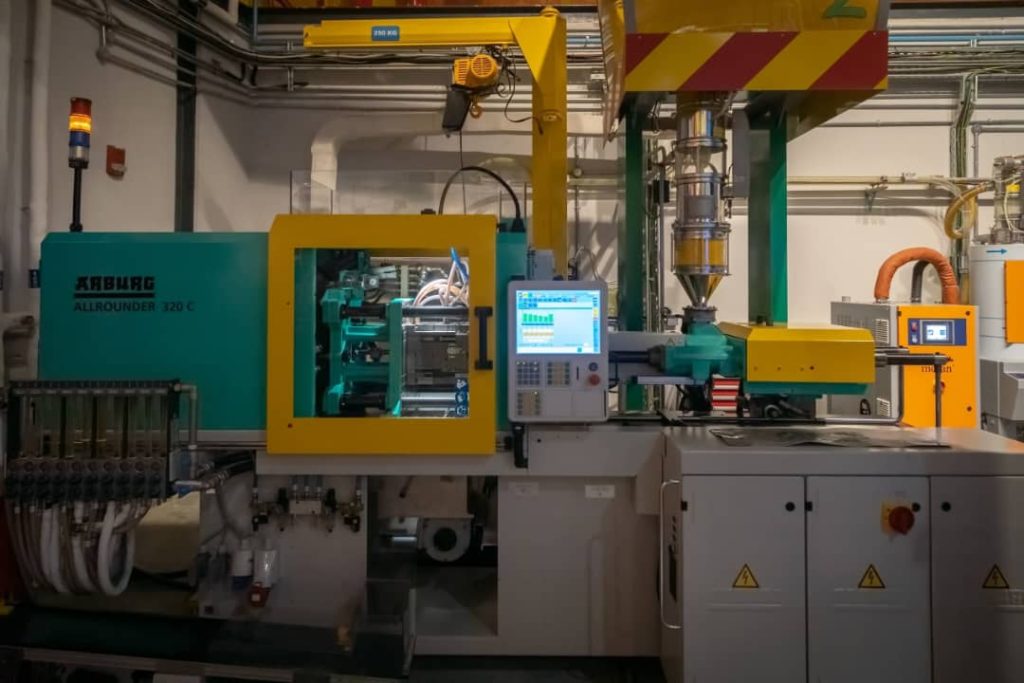
Let’s consider a scenario involving a small manufacturing company that produces plastic components. They acquired a used injection molding machine at a great price. The machine’s mechanical parts are robust, and it appears to be a sound investment.
However, over the first few months of operation, the company notices several recurring issues:
Inconsistent Cycle Times: The machine’s cycle time—the time it takes to produce one component—fluctuates unpredictably.
The operator, despite their best efforts, cannot get the machine to consistently run at the same speed.
Frequent Minor Faults: The machine stops intermittently with no clear explanation. The operator must manually reset it, leading to wasted raw material and lost production.
High Scrap Rate: A significant number of components are ejected as waste due to slight inaccuracies in the molding process.
The control system lacks the precision to make the fine adjustments needed to correct this.
The Bottleneck Revealed
The company brings in a technician who discovers the problem is not mechanical.
The issue lies within the antiquated control system. The PLC is an old model with a slow processor and program execution is resulting in the inconsistent cycle times.
The old software and limited diagnostics mean it cannot pinpoint the cause of the minor faults, forcing manual resets.
Finally, it lacks the advanced programming capabilities to precisely control the injection process, leading to a high scrap rate.
In this scenario, the machine’s physical capabilities are being bottlenecked by its outdated brain.
The operator is frustrated because they are limited by the system, not their own skill. The business is losing money due to lost production and wasted materials.
The initial savings on the machine have been quickly erased by these operational inefficiencies.
The Operator’s Frustration
I have observed this firsthand in my work. A highly competent operator is one of your most valuable assets.
But when they are forced to work with a flawed system, their expertise is rendered ineffective. They are stuck trying to get best performance from a machine that is fundamentally limited.
This not only impacts productivity but can also lead to low morale and higher employee turnover.
A modern control system, with its clear diagnostics, consistent performance, and user-friendly interface, allows the operator to focus on their job, not on wrestling with obsolete technology.
A Call for Strategic Evaluation
My research indicates that the performance of a used machine is inseparably linked to the state of its control system.
The attraction to a low purchase price should never overshadow the risk of acquiring a machine with a major operational bottleneck.
I urge you to think about efficiency not just in terms of your team, but also in terms of the tools you provide them.
The most advanced workforce cannot overcome the limitations of a system that is fundamentally holding them back.
Join me next week as I address a far more serious consequence of outdated systems: the unseen risk they pose to both safety and compliance.