


Habitat Loss — A Global Crisis with Unequal Burdens
Habitat loss is one of the most pressing environmental issues facing the world today. It refers to the destruction, fragmentation, or degradation of natural environments that are home to countless species.
While habitat types vary from freshwater and terrestrial to marine and artificial spaces like gardens, the rapid decline in natural habitats is disproportionately affecting the world’s poorest and most marginalised communities.
From the forests of Sub-Saharan Africa to the islands of Madagascar and the rainforests of the Amazon, habitat loss is closely linked with poverty, food insecurity, displacement, and even public health crises.
These effects are not evenly distributed; they fall hardest on communities with the fewest resources to adapt or resist.
The Hard Truth: Habitat Loss Hits the Poor the Hardest
- Economic Dependence on Natural Resources
In developing regions, especially in Sub-Saharan Africa, Latin America, and Southeast Asia, rural communities rely heavily on natural habitats for their livelihoods.
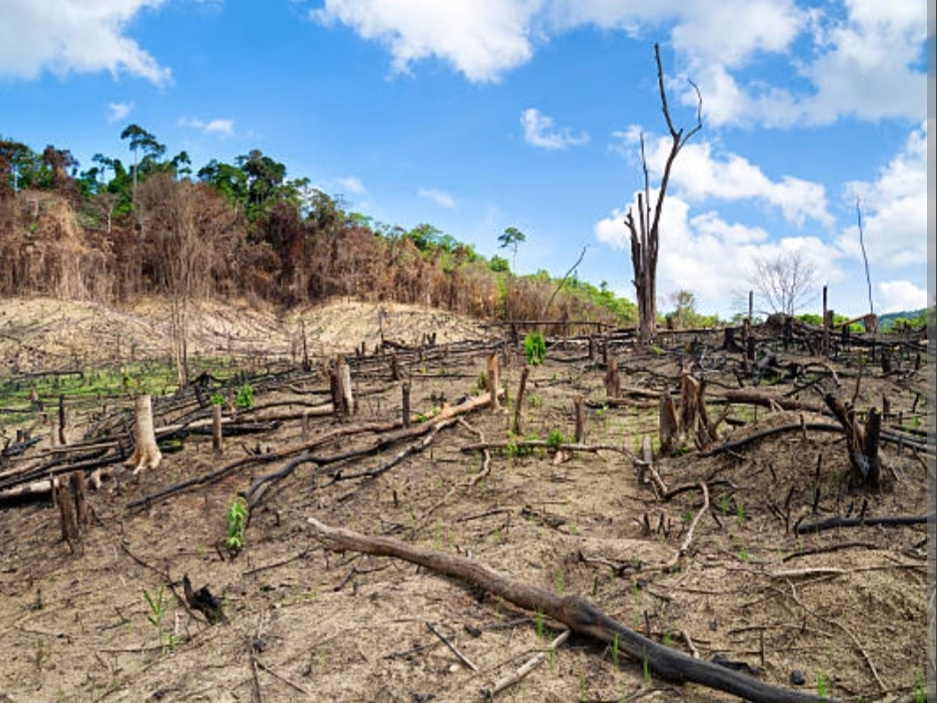
Agricultural expansion is the primary driver of habitat loss in these regions. With limited economic alternatives, families clear forests to grow crops, graze livestock, or extract timber.
For example, in Sub-Saharan Africa, agricultural expansion is projected to cause a 12% loss of species’ habitats — with small-scale farmers at the heart of the transformation (UNEP, 2022).
In Madagascar, slash-and-burn agriculture known locally as tavy continues to degrade vital ecosystems, leaving communities vulnerable to soil erosion, drought, and long-term poverty.
- Mining and Illegal Resource Extraction
Africa is rich in minerals, but this wealth often brings destruction instead of development.
In countries like South Africa, Burkina Faso, and the Democratic Republic of Congo (DRC), the rush for gold, cobalt, and diamonds has led to widespread habitat destruction.
In Zimbabwe, illegal gold miners known as mashurugwi are ravaging forests in search of mineral wealth, often in protected areas, leading to irreversible damage to ecosystems.
These activities displace communities, destroy farmlands, and contaminate water sources trapping people in cycles of poverty and environmental degradation.
- Biodiversity Loss Threatens Food and Water Security
Habitat loss directly undermines biodiversity, which in turn destabilises local food systems.
With over 6,400 animal species and 3,100 plant species under protection in Africa (IUCN, 2023), their decline is not just an ecological tragedy — it is a socio-economic one.
In the Congo Basin, for instance, habitat loss and poaching are degrading the forests that forest-dependent communities rely on for food, medicine, and shelter.
As biodiversity dwindles, crop yields suffer due to reduced pollination, and wild food sources diminish, increasing the risk of malnutrition.
Similarly, water scarcity is worsening in places like South Sudan, where environmental degradation is shrinking grazing lands and water sources.
These ecological pressures spark conflicts over resources, further destabilising poor communities.
- Displacement, Conflict, and Public Health Risks
Habitat degradation fuels conflict and forced migration. In Nigeria’s Middle Belt, clashes between farmers and herders are often linked to shrinking grazing lands and desertification — both outcomes of habitat loss.
These tensions deepen poverty, especially among women and children who are often displaced and left without access to land or support systems.
There are also serious public health risks. According to the World Health Organization (WHO), habitat destruction — particularly at tropical forest edges increases the chances of zoonotic disease outbreaks, such as Ebola, Nipah virus, and even COVID-19.
The poor, living in closer proximity to wildlife and lacking access to healthcare, bear the brunt of these outbreaks.
Real-World Example: DRC’s Deforestation Crisis
In the DRC, habitat loss is widespread due to logging, mining, and agriculture. The Congo rainforest, the second-largest tropical forest on Earth is being destroyed at alarming rates.
Forest-dependent communities, who rely on this ecosystem for food, water, and cultural identity, are now facing displacement, disease, and poverty.
Deforestation has also compromised water quality, increased flood risks, and exacerbated food shortages. The situation exemplifies how habitat loss is both a cause and consequence of poverty.
Hope Through Conservation: A Path Toward Equity
Despite the grim outlook, there are strategies that offer hope particularly when communities are involved and benefit directly.
Community-Based Natural Resource Management (CBNRM) in Namibia
Namibia’s CBNRM program is a leading example of how conservation can lift people out of poverty.
Local communities manage wildlife conservancies, benefiting from ecotourism, trophy hunting, and sustainable harvesting.
These initiatives have helped reduce poaching, conserve habitats, and fund schools and clinics (Africa Wildlife Foundation, 2023).
Restoration and Corridor Conservation
Replanting trees, restoring wetlands, and creating wildlife corridors have proven effective in reversing habitat degradation.
These solutions not only preserve biodiversity but also improve access to clean water, reduce the impact of climate change, and create green jobs for the youth.
Traditional Knowledge and Herbal Medicine
In African rural communities, forests serve as pharmacies. Conserving habitats means preserving access to traditional herbal medicines, which are often the only affordable healthcare option in marginalised areas.
Protecting these spaces is protecting life.
Habitat Justice is Social Justice
Habitat loss is not just an environmental issue — it is a social and economic one. For millions living in poverty, forests are not just trees, rivers are not just waterthey are lifelines. As the forests fall and ecosystems collapse, the most marginalised are the first to suffer and the last to recover.
If conservation is to succeed, it must be inclusive, just, and community-led. Investing in habitat protection is an investment in people — in their food, water, health, and dignity.