


When we were in high school, hungry for both ideas and tuck—especially when school provisioning lagged a month ahead, our Sinyoro, Rodwell Mashatise of the Moyo totem, always delivered.
Under his steady, cool leadership, a mere 2 kg packet of sugar could fuel a dormitory full of us drinking sweet maheu fermented from leftover sadza for weeks.
We called him Roddie. Now he is a man and we call him by his clan king-name, Sinyoro. But this is not a story about him; it is about how his sharp ideas still inspire me.
On one of our “beer talks” over the phone, Sinyoro brought up a surprising observation: the booming tombstone-making business in Zimbabwe is quietly reducing poverty by creating jobs—but it is also stirring health hazards and traffic chaos in residential areas like Rugare and Kambuzuma. Intrigued, I grabbed pen and paper to dissect this patchwork of employment, risk, faith, and governance.
1. A Flourishing Trade Born of Tradition and Transformation
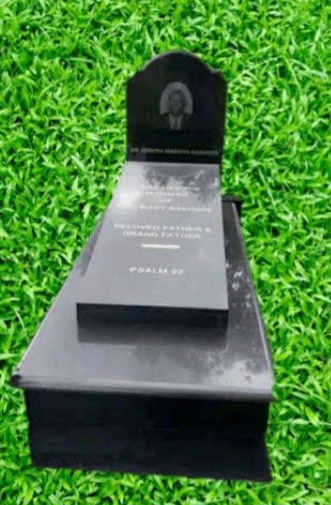
Tombstone craft—once modest has grown into a thriving small-scale industry. Around holiday seasons like, Heroes and Christmas, the unveiling of tombstones becomes a cultural focal point: Zimbabweans save up, often paying more than twice their monthly income, to honor loved ones with ornate granite markers.
One tombstone can cost anywhere from US $150 to $2,500, and installment plans are common in the capital’s peri-urban areas.
Families gather with meals, music, dance, song, Christian prayers—or ancestral rituals—to seek blessings. It is culture, piety, and economic necessity rolled into one .
From a poorest‐month improviser like Sinyoro would approve, enterprising local youths have seized on the demand: bystanders’ yards, open spaces, and makeshift workshops sprout around towns like Rugare and Kambuzuma—areas where residents and tombstone businesses now share dusty, congested streets.
2. Job Creation Meets Dust, Noise, and Health Hazard
Tombstone workshops provide vital income. Craftsmen hire several assistants, deliver stones, engrave portraits, polish granite, and offer friendly flexibility to hard-pressed families.
But with grinders, dust, and sharp tools scattered at front yards, the environmental and health tolls are mounting.
Silica dust, a byproduct of cutting and grinding granite, is more than just nuisance—it causes silicosis, a chronic and irreversible lung disease with symptoms like shortness of breath, coughing, fatigue, chest pain, and eventual respiratory failure.
Even worse, silicosis increases vulnerability to tuberculosis and lung cancer .
Dust also worsens general respiratory conditions, aggravates asthma, bronchitis, and other ailments—a pattern well-documented in Zimbabwe’s industrial sectors .
In places like Rugare and Kambuzuma, dust-laden air and traffic combine to make life harsh: roads clogged by delivery trucks and customers pausing mid-drive to negotiate tombstone designs while impeding traffic flow.
The result: congestion, frayed tempers, accidents, and dust drifting straight into homes.
3. Faith, Culture, and Tombstones: Who Embraces the Practice—and Why
The tombstone unveiling tradition crosses religious lines. Apostolic believers, mainstream Christians, and even some non-believers engage in it—sometimes as Christian memorials, sometimes blending with ancestral practices.
In Zimbabwe, the majority of Christians—many represented by Pentecostal and Charismatic churches—navigate a creative tension between traditional and biblical expression .
From a biblical standpoint, erecting memorial stones is long-standing: Jacob’s tomb for Rachel (Genesis 35:20) was a memorial, not idol worship; Christians can view tombstones similarly when practiced as respectful remembrance, not reverence beyond God .
Moreover, Christian perspectives on cemeteries include honoring the dead, reflecting on life, and drawing spiritual lessons.
As Pastor John Piper notes, visiting graves can be a spiritual practice—honoring loved ones, expressing gratitude to God, and being reminded of mortality while trusting in Christ’s promises .
Scripture also warns against hypocrisy regarding tombs: in Matthew 23:29, Jesus condemns Pharisees who build elaborate monuments for prophets but neglect their teachings .
The exhortation here is moral, not about tombstones per se—but underscores faithful living over decorative memorials.
4. From Dust to Dilemma: What the Poor Face Between Income and Illness
For low-income tombstone workers, the trade is simultaneously a lifeline and a hazard. These micro-entrepreneurs and day laborers stake precious income on physical labor amid silica dust—and often lack protective gear, wet tools, or ventilation.
How can the poor protect both their livelihood and their health?
- Use affordable controls: simple water spray on cutting equipment drastically reduces dust. Employers or groups can share water kits to wet down stones while grinding.
- Wear basic PPE: even a cloth mask tripped with a damp rag can reduce inhalation, and gloves or goggles may protect.
- Rotate tasks and limit exposure: switching roles, timing work for cooler, less dusty parts of the day, or limiting grinding time helps.
- Collectively bargain or form cooperatives: better PPE and tools become affordable when pooled among several workers.
- Seek mobile or community health screenings: early detection of silicosis or respiratory issues improves the ability to mitigate further harm.
Without such strategies, workers risk serious disease, loss of income, and medical costs—thereby nullifying the very livelihood the industry provides.
5. When Business Meets Home: Rugare and Kambuzuma as a Case Study
In areas like Rugare and Kambuzuma, tombstone workshops frequently coexist with houses—a fractured zoning reality where business and residence collide.
- Congestion: trucks loaded with granite and clients blocking narrow access roads.
- Noise and working hazards: grinders roar alongside daily home and school routines.
- Parents worry: as motorists slow to hawk stones, children playing in the same street risk accidents. And dust wafts through windows, leaving families anxious about respiratory health.
These clusters reveal glaring needs for regulation and better spatial planning.
6. Toward Smarter Regulation: Taxing, Registration, and Safe Locations
Here’s where authorities can intervene—balancing entrepreneurship and public welfare:
- Registration & Licensing: tombstone workshops should register businesses, comply with simple health and safety rules (e.g. containment measures for dust, proper tools, basic PPE), and submit to inspections.
- Designated zones: authorities can establish simple “craft corridors” or small industrial zones, where carving takes place away from homes, with access to water, waste disposal, and shared infrastructure.
- Tax incentives: small business allowances, subsidized PPE, or tools via tax rebates could encourage compliance and formation of co-ops.
- Municipal bylaws on air quality and noise: even basic rules like “no grinding between 7 pm and 6 am” or “wet cutting only” can drastically reduce impact.
- Community-industry dialogue: leadership from local councils, health ministries, and tombstone cooperatives can co-create compromise solutions for dusty trade yet livable neighborhoods.
Currently, without such policies, the industry remains partly informal—creating jobs, but also risking lives and daily peace.
7. A Final Reflection: From Dorm Maheu to Tombstone Dust
Sinyoro’s dormitory maheu shows how ingenuity can lift communities in lean times. Today, tombstone making is another form of that resourcefulness—turning absent provisioning into purpose. But in harsh environments like Rugare and Kambuzuma, ingenuity must be accompanied by protective measures and governance.
Faith communities largely affirm tombstone marking—framed as memory, respect, and spiritual reflection—not idolization. The Bible offers both precedent and caution: memorial stones root us in history (e.g. Jacob for Rachel), but Jesus warns against hypocrisy—placing monuments ahead of godly living (Matthew 23:29). Christians who remember the dead do so best when honoring God and caring for the living.
For the poor carving tombstones, the challenge is to earn honestly without sacrificing health. A mix of shared PPE, safer practices, and community cooperation is vital.
Authorities, on their part, must not crush the small-scale industries—jobs are critical—but neither may they ignore the dust and danger. With modest regulations, zoning, and supportive incentives, the tombstone industry can thrive safely—honoring the dead and sustaining the living.