


I never imagined I would find myself writing about religion. But when faith grips you, it does not ask for permission, it simply takes over. One moment you are covering courtrooms and stadiums, the next you are decoding sermons, immersed in a language as layered and symbolic as any legal or sporting discourse.
Somewhere along this unexpected path, I paused for a moment of deep introspection. Was this a calling? Or just a shift in purpose? And amid all the scripture and spectacle, one question kept echoing: Where are the poor in this grand design? That question became my compass and this story, is part of the journey. So sit back, relax, maybe grab some popcorn and let us dive into it.
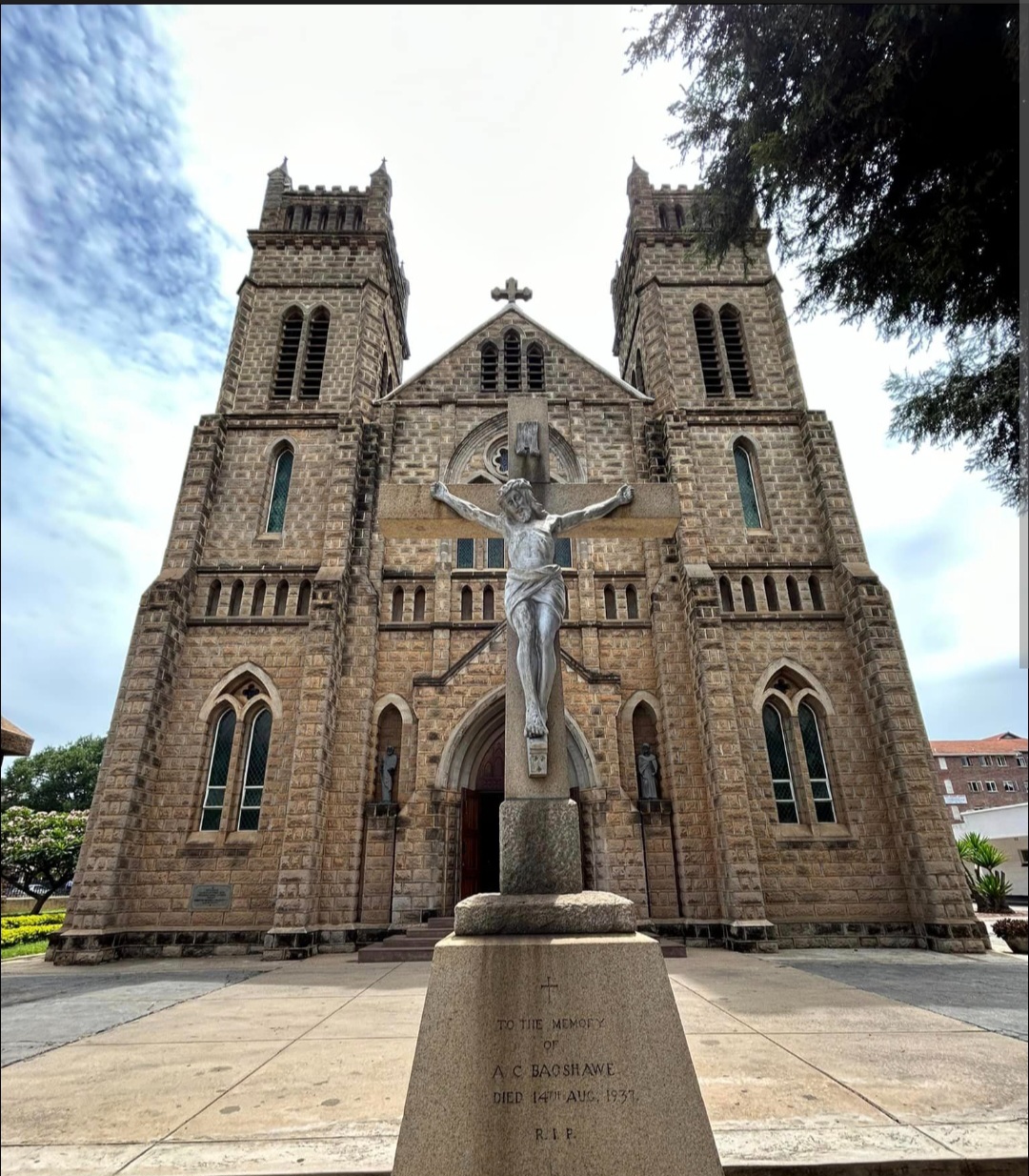
From the dangerous slums of Johannesburg, South Africa to the congested suburbs of Lagos, and the potholed streets of Zimbabwe, one structure often dominates open spaces, former industries and every building ; a church.
In almost every corner, there is a new tabernacle, prophetic center, or revival tent promising hope, healing, and prosperity.
Yet, you will struggle to find factories or industries offering employment or innovation.
This curious reality, more churches than industries in many developing countries, raises a difficult question: has religion become a substitute for economic development?
This epistle explores the relationship between religion and poverty through the lenses of theology, philosophy, and economics.
It interrogates whether religion helps the poor escape poverty or simply supports them within it.
Religion as Refuge in Developing Worlds
In developing countries, where economic and political uncertainties are rampant, religion provides both comfort and community.
According to Pew Research, over 90% of sub-Saharan Africans identify as religious.
This religious devotion is not merely ceremonial—it is central to life.
In the absence of functioning social systems, churches become safety nets, offering food, childcare, counselling, and communal solidarity.
Dr. Tom Rees, in the Journal of Religion and Society, argues that in areas with weak institutions and poor social safety nets, people turn to religion not just for spiritual answers, but also for material support.
His research shows that economic insecurity fuels religious commitment, people need something to believe in when systems around them collapse.
In this environment, faith becomes a coping mechanism for the hardships of everyday life. As the Bible says in Proverbs 18:10, “The name of the Lord is a strong tower; the righteous run into it and are safe.”
For many, religion fills the gap left by broken systems.
Compassion or Consolation?
The Bible is rich in passages about poverty.
Luke 6:20 proclaims, “Blessed are you who are poor, for yours is the kingdom of God.”
Proverbs 22:7 reminds us that “the rich rule over the poor, and the borrower is slave to the lender.”
These verses comfort and validate the struggles of the impoverished.
However, when these scriptures are interpreted narrowly, they can promote passivity.
Too often, religious leaders teach the poor to wait for divine intervention instead of encouraging them to demand justice or pursue economic empowerment.
The result is a theological fatalism; a belief that poverty is God-ordained and that riches will only come through prayer and obedience.
The prosperity gospel, popular in many Pentecostal churches, exacerbates this by implying that poverty is a sign of spiritual failure.
The faithful are urged to give more tithes and offerings to unlock divine blessings, while their living conditions often remain unchanged.
Yet, the Bible also calls for practical action.
James 2:16–17 warns against empty religious rhetoric: “If one of you says to them, ‘Go in peace; keep warm and well fed,’ but does nothing about their physical needs, what good is it?
Faith by itself, if it is not accompanied by action, is dead.”
This suggests that spirituality and social justice must go hand in hand.
Churches as Economic Systems
Churches in developing countries often function as powerful economic institutions.
Many are run like corporations, collecting vast sums in donations, organizing large-scale events, and broadcasting on television and radio.
Some of the wealthiest individuals in countries like Zambia, Zimbabwe, Nigeria and South Africa are religious leaders.
These churches employ staff, build large auditoriums, and own assets ranging from real estate to schools.
Yet, unlike formal businesses, many churches are exempt from taxation and financial regulation.
This results in a parallel economy funded by the poor but enriching only a few.
While worshippers hope for a miracle, their contributions fund the luxurious lifestyles of their leaders.
The sociologist Max Weber, in The Protestant Ethic and the Spirit of Capitalism, famously linked Protestant Christianity to the development of modern capitalism in the West.
He argued that work, thrift, and discipline values promoted by Reformed theology contributed to the rise of industry and economic growth.
Ironically, in much of the developing world, religion has become a substitute for industry, not a driver of it.
Why the Poor Remain Too Religious
In places where there is no reliable healthcare, where education is underfunded, and where governments are corrupt, religion becomes the only constant.
This over-reliance, however, fosters an unhealthy dependency.
A study cited by The New York Times found that in the poorest counties in the United States, residents were more likely to search for terms like “hell,” “antichrist,” and “the rapture.”
These apocalyptic views offer a psychological escape: if this world is doomed, then suffering has purpose, and salvation lies in the next life.
This mentality is widespread in the global south.
The poor are not just religious, they are too religious in the sense that religion becomes the primary lens through which all aspects of life are understood.
It shapes their politics, health choices, and economic decisions, often at the expense of critical thought and practical engagement.
Friedrich Nietzsche warned against religions that glorify suffering and submission. He believed such doctrines suppressed human potential and ambition.
Humanist philosophy offers an alternative: rather than waiting for heaven, it urges people to improve life on earth. “This life is the only one we have,” humanists argue. “Make it count.”
Would Richer People Be Less Religious?
There is strong evidence to suggest that economic prosperity is linked to secularization.
Countries with developed industries and social welfare systems—m such as Sweden, Germany, and Japan tend to be less religious.
Once people have stable incomes, quality healthcare, and education, they are less inclined to depend on divine intervention.
This does not mean wealth eradicates faith.
Rather, it transforms it.
Religion in developed countries often becomes a private, cultural affair not the all-encompassing force it is in poorer regions.
Thus, the issue is not religion per se, but the role it plays in everyday life.
If developing countries invested more in education, technology, and industries, religion could be practiced alongside not instead of development.
The Game Changer
Education has the power to disrupt the poverty-religion cycle.
A well-educated population is more likely to ask critical questions, hold leaders accountable, and innovate economically.
Yet in many developing regions, churches have monopolized education, especially in rural areas.
While some do commendable work, others use education to indoctrinate rather than liberate.
Secular, inclusive, and quality public education is vital. It empowers individuals to understand systemic problems and design collective solutions.
It also reduces the tendency to attribute all hardship to spiritual forces.
A Call for a New Theology
Religion need not be discarded it must be reformed.
Liberation theology, born in Latin America, insists that true faith stands with the oppressed and fights injustice.
It critiques systems that keep people poor and challenges believers to take action.
Black theology, feminist theology, and indigenous theologies across the developing world echo the same message: faith must be about empowerment, not pacification.
Churches must become centers of economic action.
They can form cooperatives, invest in community projects, fund vocational training, and demand policy reforms.
Faith leaders should be held accountable for how they use resources and whether they are truly serving the communities that support them.
From Consolation to Liberation
The dominance of churches over industries in developing countries reflects a deeper malaise: a failure of economic systems and political leadership.
Religion offers hope but hope alone cannot build roads, create jobs, or educate children.
It is time to move from fatalism to faith with works.
James 2:17 says, “Faith without works is dead.”
The future of developing nations depends on whether the poor can rise not only spiritually, but socially and economically.
That will require both belief and action.
Only when churches become factories of empowerment, rather than temples of endurance, will the balance shift.
And only when the poor become architects of their own destiny, rather than passive recipients of divine mercy, will true transformation.