

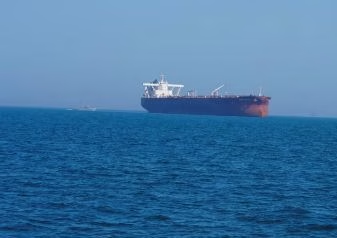
Iran has reimposed restrictions on the Strait of Hormuz, citing what it calls repeated “breaches of trust” by the United States, in a move that threatens to destabilise one of the world’s most critical oil transit routes.
The decision comes amid a fragile ceasefire and follows accusations from Tehran that Washington has continued enforcing a naval blockade on Iranian ports despite ongoing diplomatic efforts.
Iranian military officials said passage through the strait is now under “strict management and control” of the armed forces.
They warned that any vessel movements would be considered invalid if the US blockade persists.
The escalation places renewed pressure on global energy markets, as the Strait of Hormuz remains a key artery for international oil shipments.
US President Donald Trump has maintained that the naval blockade will not be lifted until a comprehensive agreement is reached with Iran.
His stance signals a hardline approach, even as both sides edge toward a potential new round of negotiations.
Iranian sources indicate that talks between US and Iranian delegations could take place on Monday, although Washington has not officially confirmed the meeting.
Trump has also warned that the current ceasefire may not be extended if negotiations fail.
Meanwhile, the broader regional situation remains volatile.
In Lebanon, Israeli forces are enforcing new restrictions preventing residents from returning to dozens of villages, despite a ceasefire that had initially raised hopes of de-escalation.
The reimposition of controls in the Strait of Hormuz underscores the fragile nature of the ceasefire and highlights the persistent mistrust between Tehran and Washington, raising fears of renewed confrontation in an already tense region.